Chemical rooms in cheese processing facilities take a beating that most floors simply cannot handle. Concentrated acids, caustic cleaners, and sanitizers hit the concrete every single day. Standard coatings and thin epoxies break down fast under that kind of exposure, leaving cracked, peeling surfaces that become a food safety liability. This project at an Ohio cheese facility is a textbook example of what happens when you specify the right system from the start.
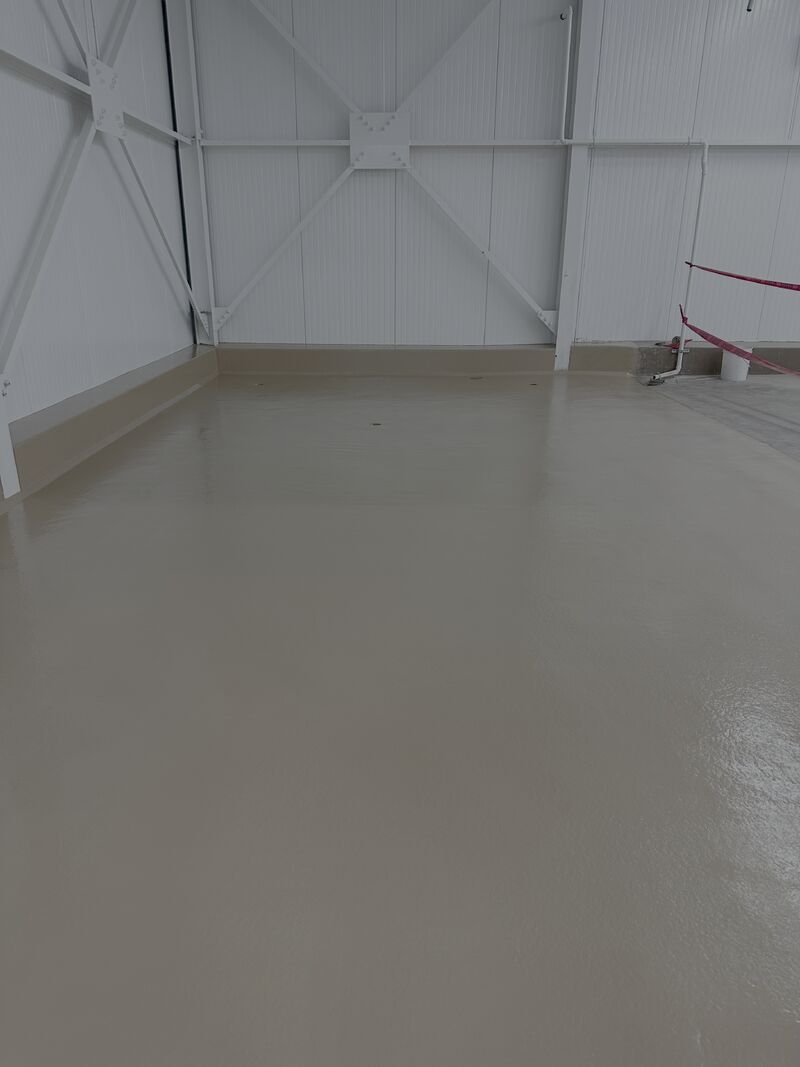
The Challenge: Daily Chemical Exposure
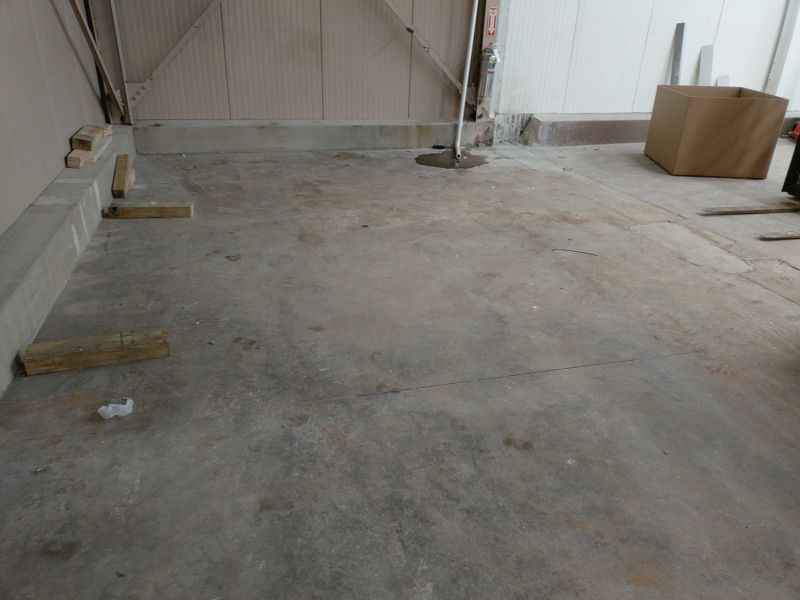
Cheese processing facilities use some of the most aggressive chemicals in the food industry. CIP (clean in place) systems cycle through caustic soda, nitric acid, phosphoric acid, and peracetic acid on a regular rotation. The chemical room where these solutions are stored, mixed, and dispensed sees constant splashes and spills at full concentration. Most flooring materials, including standard epoxies, cannot survive that kind of chemical attack for long.
The existing floor in this facility had deteriorated to the point where it was no longer protecting the concrete substrate. The general contractor on the project, Beaver Constructors, Inc., brought us in to install a system that could stand up to the daily abuse.
The Solution: SaniCrete STX with Chemical Resistant Top Coat
We installed SaniCrete STX at 3/8" thickness, our stainless steel reinforced cementitious urethane system. STX is engineered for exactly this kind of environment. The cementitious urethane body provides thermal shock resistance and structural integrity, while the stainless steel fibers add reinforcement that prevents cracking under impact and thermal cycling.
On top of the STX base, we applied a chemical resistant top coat specifically formulated to handle the concentrated acids and caustics used in dairy and cheese operations. This two-layer approach gives the floor both the mechanical toughness of cementitious urethane and the enhanced chemical resistance needed for rooms where concentrated solutions are the norm.
The combination matters. A chemical resistant coating alone, applied directly to concrete, will eventually lose adhesion because the concrete underneath cannot handle the moisture and chemical migration. The STX base layer acts as a barrier and structural foundation that the top coat can bond to permanently.
Why Chemical Rooms Need Special Attention
Chemical rooms are often overlooked during facility planning. They are small compared to production floors, so they get less attention. But a failing chemical room floor can contaminate the concrete slab, compromise the room's containment, and create safety hazards for the workers handling these materials. A spill on a deteriorated floor does not stay in the chemical room. It migrates through cracks and joints into adjacent areas.
The right flooring system in a chemical room is not just about durability. It is about containment, worker safety, and protecting the rest of the facility from chemical migration. SaniCrete STX with a chemical resistant top coat checks all three boxes.
Shoutout to Beaver Constructors, Inc. for bringing us in on this one. Working with a good GC makes all the difference, and this project came together exactly the way it should.
Products Used
- SaniCrete STX - 3/8" stainless steel reinforced cementitious urethane with chemical resistant top coat