The details matter just as much as the final product. Before we mix a single batch of material, before the first trowel hits the floor, our crew is already working to protect your facility.
Before We Mix a Single Batch
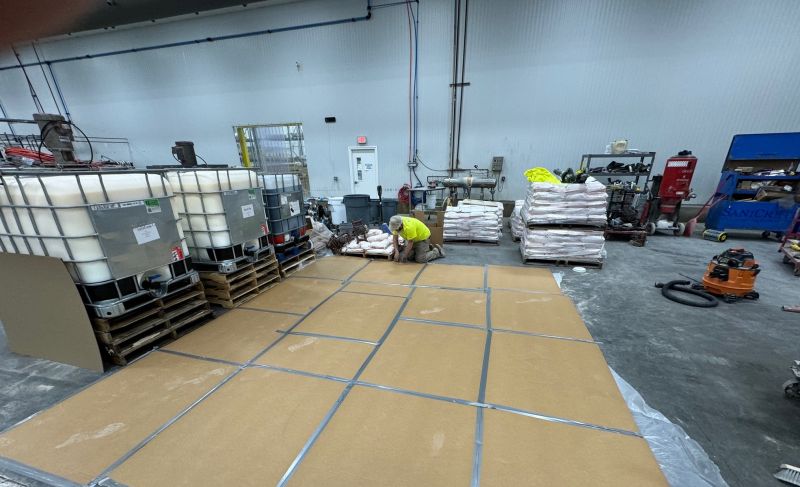
Plastic sheeting goes down first. Then cardboard. Every surface around our mixing and staging area gets covered. IBC totes, pallets of material, and mixing equipment all sit on protection, not on your floor or your walls.
This isn't just about keeping things tidy. In a food processing facility, any dust, debris, or residue left behind is a contamination risk. We're working in USDA-inspected environments. The standard isn't "good enough." It's spotless.
Why This Matters
We've seen what happens when contractors don't take this step. Resin splashes on walls. Aggregate dust in HVAC systems. Grout haze on equipment that takes weeks to clean. That's not how we operate.
Our crew treats your facility like it's our own. Equipment gets protected. Adjacent areas get sealed off. Traffic paths get covered. When we pack up and leave, the only evidence we were ever there is the new floor under your feet.
It Says Everything About the Crew
You can tell a lot about a flooring contractor by how they set up a jobsite. If they're cutting corners on protection, they're probably cutting corners on the floor too. Our approach is simple: do everything right, from the first sheet of plastic to the last trowel pass.
That's been the standard since 1990, and it's not changing.